URF.ASX
40% discount to NAV with near term catalysts

US MASTERS RESIDENTIAL PROPERTY FUND – URF.ASX
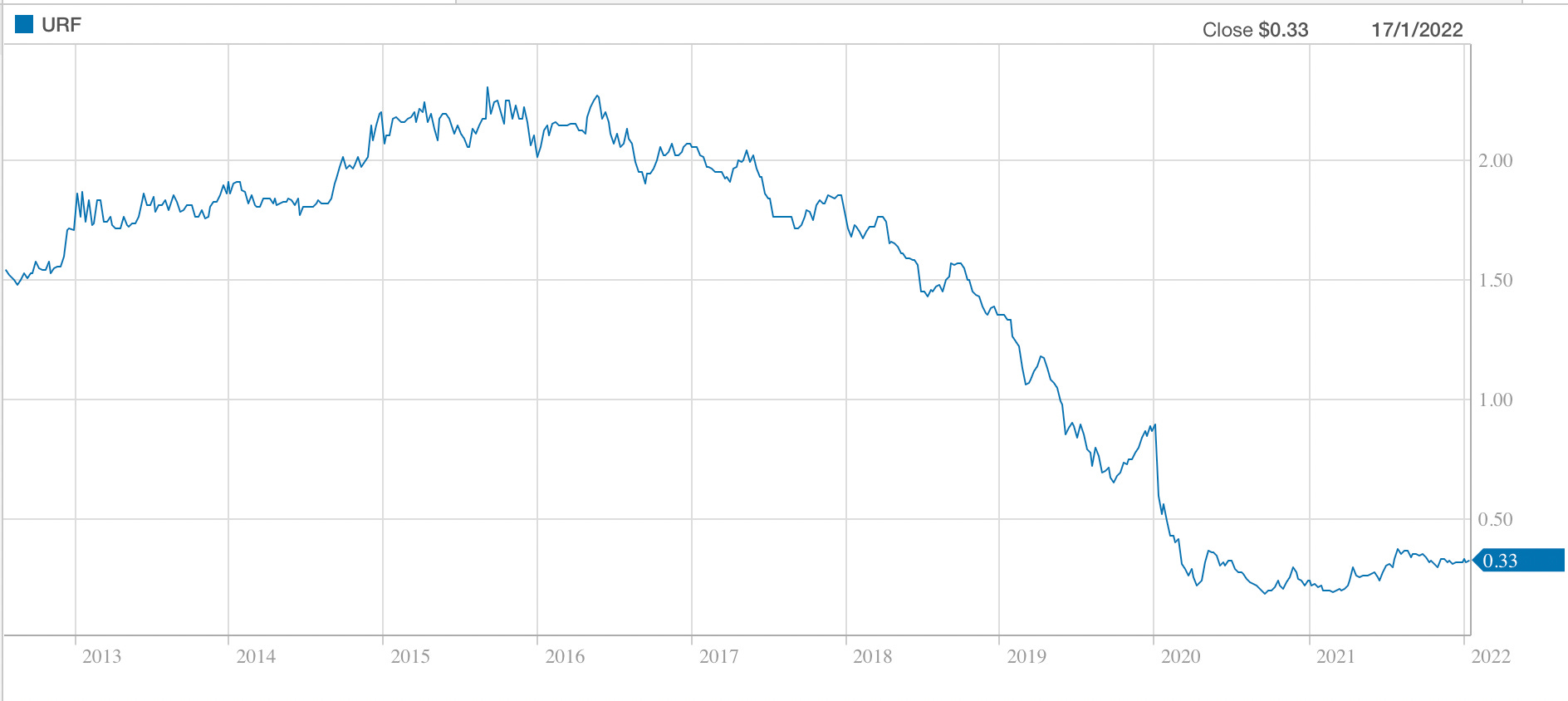
URF SHARE PRICE COMPARED TO RESI PRICES IN NEW YORK:
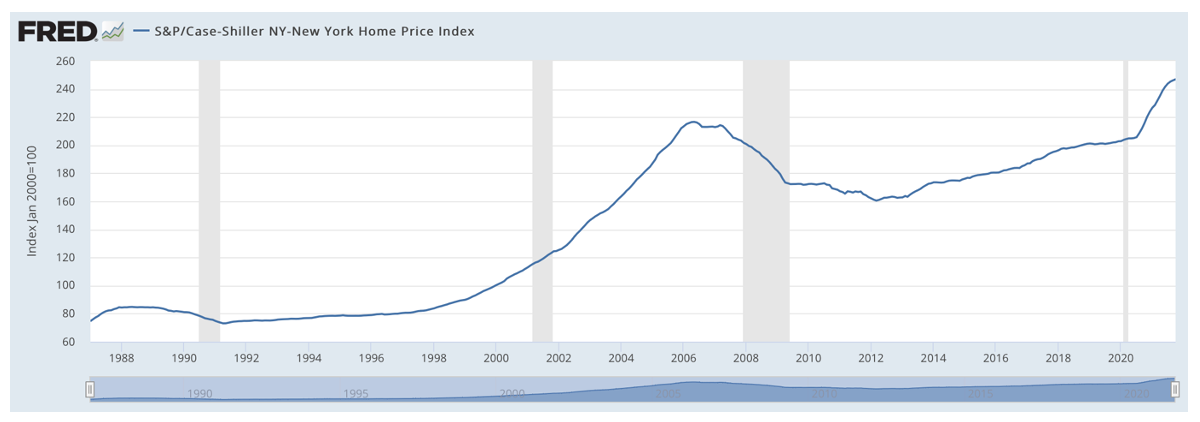
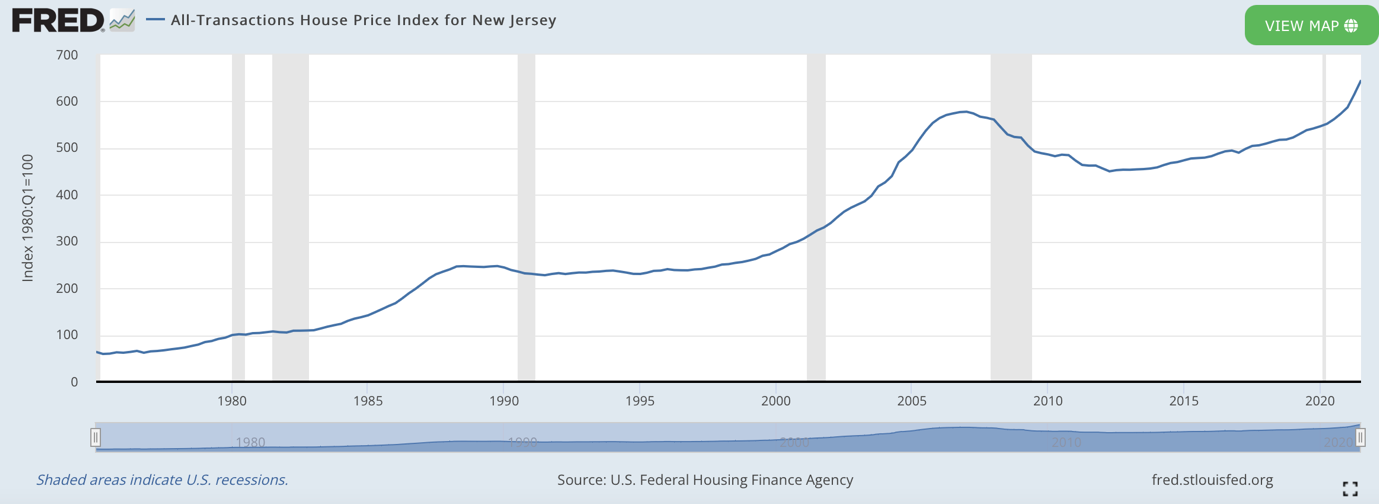
AND NEW JERSEY:
KEY POINTS:
- URF is trading at 32c vs what I estimate a fully diluted post/pre tax NAV of 51/55c – a discount of 37-42% the widest I can find on the ASX of a reasonably liquid company
- This NAV could be conservative as New York and New Jersey residential property continues to move higher which isn’t reflected in current book values
- Manhattan median rents are at record highs suggesting revenue for the fund may also rise from here
- URF has stated it will soon be Funds from Operations (FFO) positive in CY22
- They will likely have over AUD 25m surplus cash available for buybacks at the upcoming result - this would be VERY accretive on undiluted market cap of AUD 125m and fully diluted of AUD 256m
- EP1 the manager I believe is highly incentivised to get a strong result for shareholders and the legacy issues troubling the stock have been more than rectified
- They have hired external consultants to manage the process and a sale of the entire portfolio I think is likely
- This is 100% my personal view – I am long URF + URFPA and this is NOT financial advice – see disclaimer.
HISTORY:
URF is an externally managed REIT which floated mid 2012 at $1.63 per share. The manager E&P Investments is a responsible entity (RE) originally owned by Dixon Advisory which merged with Evans and Partners – now called E&P Financial Group (EP1.ASX).
The strategy was to buy New York and New Jersey residential property – renovate and develop them and then either sell or enjoy the higher rental and capital uplift. Considering a large portion of the portfolio was being renovated and thus vacant – operating losses were significant. Dividends albeit small were generally paid out of capital – not profits. This however is no different to the Aussies who negatively gear their property and still come out ahead. The strategy made sense when the AUD/USD was trading near parity as raising AUD to buy USD assets that were recovering post GFC made a lot of sense.
However URF came unstuck when the NY/NJ housing market turned, the AUD/USD fell significantly and they impaired some of their developments and renovations which saw NAV fall from a peak of over $1.60 pre tax to now 70c pre tax and URF now has AUD 360m of accumulated losses on the balance sheet – over AUD 200m of which are impairments and the balance operating losses.
Dixon Advisory the manager of URF was also criticised for charging excessive fees and related party issues which you can read about through the AFR coverage. I won’t go through this here as I believe the issues are largely resolved and the current team in place has done a solid job of stabilising the fund. EP1 has already been fined AUD 7m by ASIC and has two class actions pending – EP1 has just waived indefinitely it’s last significant fee it was receiving from URF – a 25bp responsible entity fee which is saving the fund over AUD 2m.
Consequently I strongly believe any legacy issues troubling the fund have been rectified although sentiment remains poor hence the current discount. The register still has plenty of current and ex Dixon clients which creates an ongoing overhang – but that also creates the opportunity.
DISCOUNT TO NTA:
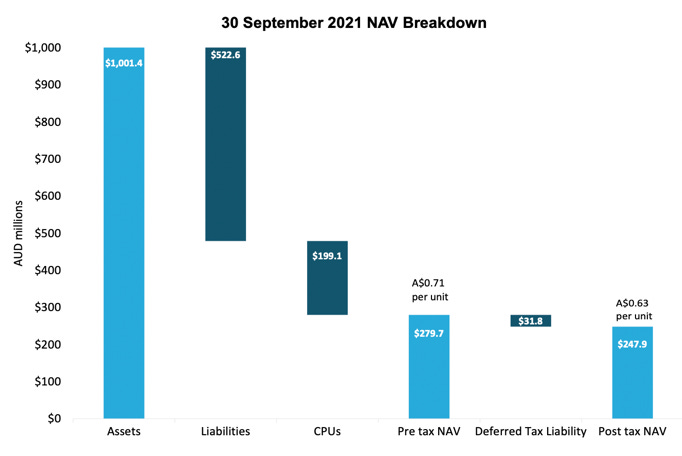
URF has been trading around 32c compared to the pre/post tax Net Asset Value (NAV) of 69/61c (it swings around as all assets/liabilities are in USD) – a 54-48% discount. URF also has AUD 200m of listed preference shares URFPA.ASX that are treated as debt and subtracted from the above table. The prefs pay 6.25% annually however on 1 Jan 2023 or 1 years time the RE can mandatorily convert the notes into ordinary shares – I assume this will occur as there is a step up that occurs post this date to 8.75% – something URF won’t want to pay. The conversion occurs at the face value or $100 per pref divided by ordinary shares using a 10 day VWAP price less a 2.5% discount.
HOWEVER there is a maximum of 205 ordinaries per 1 prefs that can be issued so URFPA will only receive $100 value if the ordinaries are trading at 50c and above. The current price of 32c implies roughly $65 per URFPA – these will be entitled to $6.25 distributions prior to conversion so the current price at around $70 makes sense.
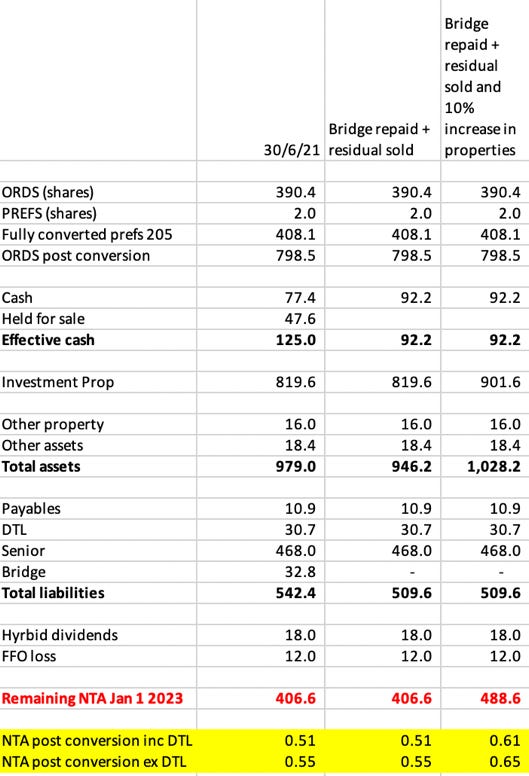
If the prefs are fully converted with a price below 50c – there will be roughly 800m ordinaries on issue and URF will be capped at AUD 256m vs NAV of AUD 406m which conservatively adjusts for the remaining pref dividends, a one off FFO loss – and includes the full deferred tax liability – see table below.
This tax liability at the most recent result was roughly halved on the basis of increased liquidity on trading of the ordinary shares which I don’t fully understand. However as mentioned URF has AUD 360m in accumulated losses on the balance sheet so I struggle to see how any tax would be payable until those are recouped – however I’m certainly no tax expert.
On that basis assuming full conversion of URFPA in 2023 at 205 shares the resulting NAV will be 51-55c assuming AUD/USD around 73c – the range depends on if you include the DTL – still a whopping 37-42% discount to NAV or missing value of roughly 160-180m. Gross assets would need to fall by 20% to bring the NAV in line with the current market cap – a massive buffer and head start for any buyers at today’s price.
The below table summarises how I see the balance sheet post conversion and the potential impact of a 10% increase in valuations. Note post reporting date 30/06/2021 they repaid a Bridge loan so only have a USD 350m senior term loan remaining. I then deduct AUD 18m for the remaining hybrid payments and assume a final FFO loss of AUD 12m.
HOW SECURE IS THE NAV?
Since mid 2019 they’ve sold circa USD 200m of properties which on average has been in line with book values. I believe that’s the best demonstration that the remaining properties are fairly valued but more likely undervalued which I’ll come to.
The most recent revaluation as at 30/06/2021 - despite the global housing boom was only a miniscule 2.7% gain as below – this is the first increase in over two years over which period URF has written off roughly AUD 200m from their properties.
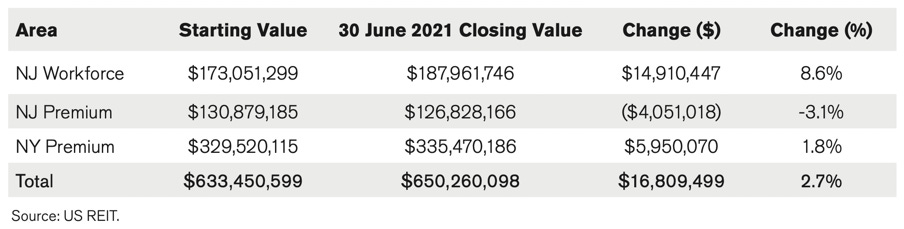
The upcoming results could see further increases to the current valuations which would result in an even greater discount to NTA which the summary table highlights.
The most recent Case Shiller housing index (20 states which includes NY) showed a total gain of 18% for 2021 and price rises for all states involved. Furthermore Manhattan rents are at their highest levels ever – suggesting any COVID impact on financial districts like New York is certainly real but not enough to slow the demand for housing.
URF accounts for its property at fair value using the “direct comparable sales” approach and values properties ever three years independently. After the scrutiny URF has been through – I assume valuations would be conservative.
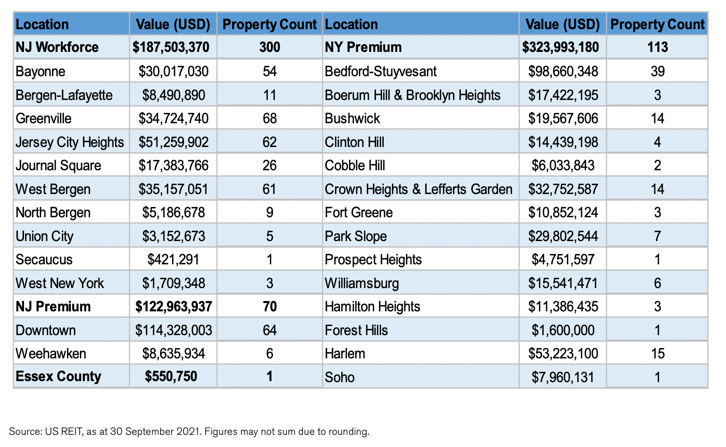
URF has roughly 480 1-4 Family properties worth on average USD 1.3m each. There are some outliers as shown below with a single Soho house worth close to USD 8m and some smaller houses worth closer to USD 500k. Whilst I haven’t visited any properties thanks to COVID - such diversification across so many properties and suburbs provides further comfort around the current valuations compared to other single asset funds.
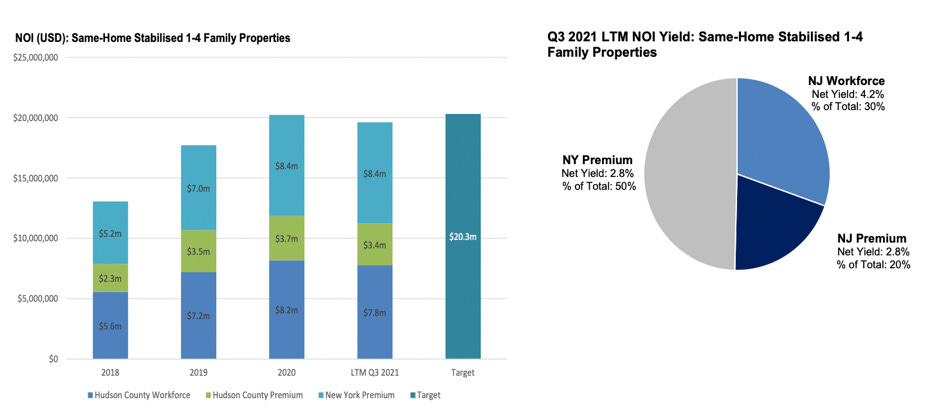
Lastly the targeted Net Operating Income (NOI) yield which is gross rent less property level expenses and taxes is seen below – this is before fund level overheads or General & Admin (G/A). URF targets are in the below table and they’re very achievable now that almost all renovations are complete. NY/NJ premium target is 2.8% - premium suburbs in similar prime and landlocked locations around the world like Sydney and London trade on far lower GROSS yields - rent before costs and taxes – further suggesting the investment values are fair.
The higher yielding portfolio “NJ workforce” at 4.2% could prove very appealing to global investors and peers who are targeting the “build to rent” segment – (Macquarie notably is targeting London) yet URF portfolio is already built and renovated and receiving consistent income so a premium is arguably justified. As mentioned rents around the US are charging higher – which suggest these yields may prove to be conservative.
https://www.afr.com/policy/economy/rents-stoke-prolonged-us-inflation-bout-20211212-p59gt6
FFO POSITIVE IN CY22:
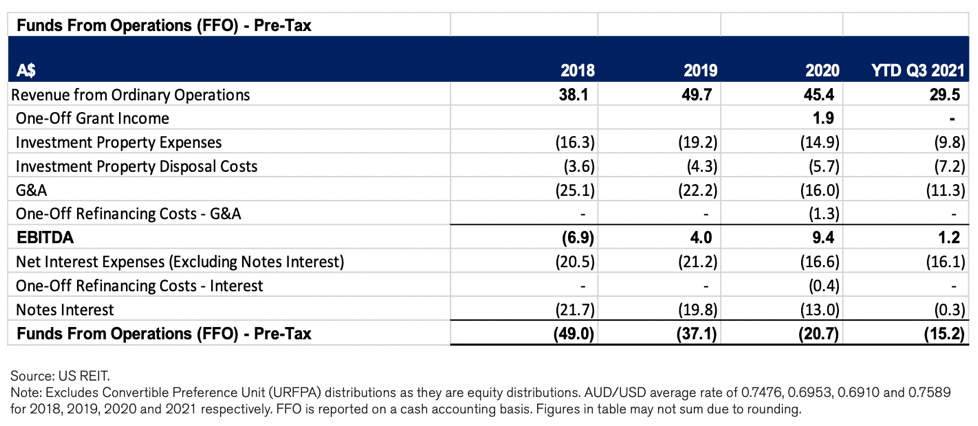
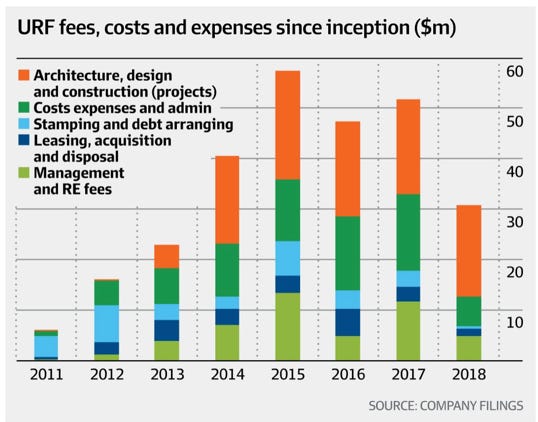
Considering the URF divestment and renovation program is now largely complete – I view the fund as a passive rent collector. The portfolio is 94% occupied and rent collections are close to 100%. The above shows a breakdown of costs historically. Going forward:
- The fund has guided to NOI of USD 20.3 or AUD 28m for the full year assuming no rent increases which is conservative
- There will be no further property disposal costs which are generally 5-7%
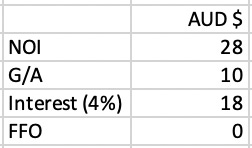
- G/A costs have been reduced to AUD 12-13m after indefinitely waiving the RE fee – a saving of AUD 2m – however I strongly believe this could and will be lower considering even at AUD 10m – this is circa 25% of gross rent vs peers who pride themselves on G/A costs being single digit % of rent
- As of 2023 I assume no further URFPA payments due to conversion
- Below is the very simple resulting P/L breaking even:
Let’s now assume that rents increase by 10% as per market trends, G/A drops to AUD 5m which is still over 10% of rent but more appropriate, and the interest paid on URF debt drops to 2.5% which would be market rates (which can only occur in 2025):
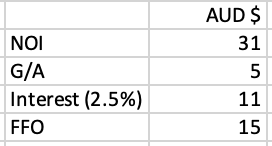
If URFPA fully converts and URF trades at 32c as per todays price – 15m FFO on a diluted market cap of 256m would be an FFO yield of 5.8%. Let’s assume most is paid out you’d be getting a yield of at least 5% - when URF major peers like Invitation Homes and Tricon yield lass than 2% for far lower quality portfolios where you aren’t landlocked unlike NY/NJ.
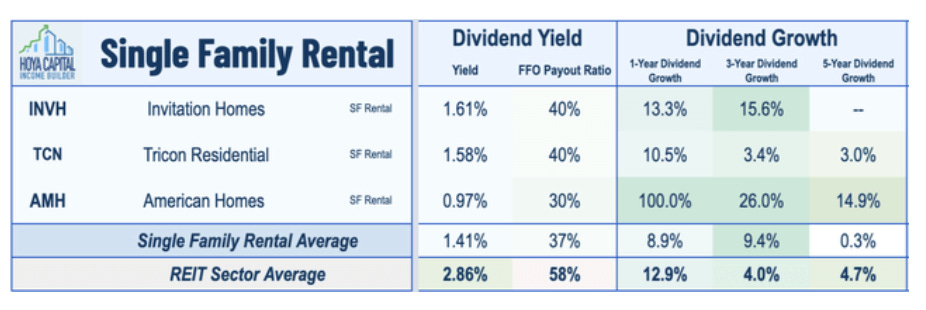
https://seekingalpha.com/article/4475698-single-family-rental-reits-meet-your-new-landlord
BALANCE SHEET NOW APPROPRIATELY GEARED:
URF historically was overgeared however has since repaid two listed URF notes at par and a USD 70m bridge loan. Assuming recent asset sales close they should have AUD 820m of core properties remaining assuming no upward revaluation – plus AUD 60m is cash – against AUD 470m in senior debt remaining. 53% gearing may put off some but large peers like Invitation Homes and Tricon are similarly as geared and borrow at far lower rates. Compared to the average Australian mortgage holder URFs balance sheet looks lazy.
URF is paying interest at 4% fixed until 2025 and can only repay 5% of this debt each year. However come 2025 when it can repay the full amount - assuming URF can borrow at market rates of around 2.5% - this will leave them AUD 7m better off. Rates may have risen substantially by then so 4% maybe fair – however if that does occur we’d expect rents to have risen strongly which hedges that risk.
IS URF UP FOR SALE?
In a market where fund managers like Blackstone, Charter Hall, Centuria etc are all accumulating funds under management (FUM) at a rapid rate as the higher their FUM the more they get paid in management fees – most fund managers would fight to retain FUM. EP1 however is going the other way and has stated that they see no future in growing their AUD 6 billion “real asset funds” of which URF is included. URF itself has since mid 2019 stated the potential for capital management and other initiatives to increase liquidity for shareholders – they have stated in video updates that a full sale something they’d explore. They’ve now as per their most recent quarterly hired an external consultant to handle the process.

The below snippet was from the EP1 most recent half year result suggesting they are working hard to get a result for URF shareholders. Considering the issues URF has caused EP1 – a key reason its own share price falling from an IPO price of $2.50 to now 60c – if EP1 can achieve a good outcome for URF shareholders and finally close the gap to NAV – this would help EP1 get on with their core business and move forward. EP1 has already changed it’s name to remove Dixon – the original manager of URF – so any further dissociation would be very beneficial for EP1. Furthermore I assume the better the outcome for URF shareholders – the less liable they would be under the two pending class actions so it’s safe to assume they are working strongly in the interests of URF. Important to note URF is not involved in any of the litigation – the claims are against the manager and Alan Dixon who no longer works at EP1.
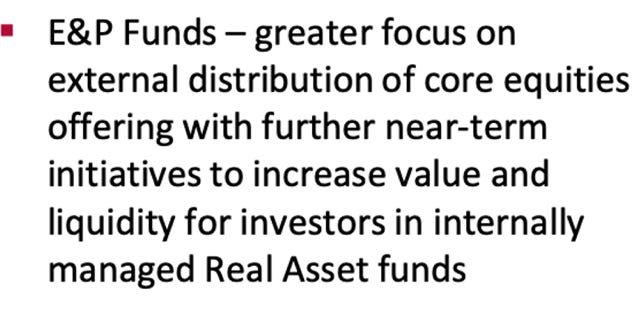
Whilst I acknowledge some of URF peers like Invitation Homes and Tricon don’t have any current exposure to New York, in a market where Charter Hall a property manager is diversifying into equities through buying Paradice Funds Management, we’d be very surprised if URF doesn’t attract some genuine and generous proposals. Oaktree (now Blackstone) and Tony Pitt of 360 Capital were rumoured to have bid for URF when problems first arose although no bid was disclosed. URF now has a stable balance sheet soon to be FFO positive – hence is in a much better position to get a great price and outcome for shareholders in the event of a bid. Another recently floated and rapidly growing fund manager Qualitas (QAL.ASX) has a NY property fund to which I have no insight into aside from the below article.
The point I’m trying to make is there is so much money floating around and fund managers trying to grow FUM – URF to me appears like an absolute sitting duck with a manager and register I believe are VERY willing to sell.
CATALYSTS:
- The upcoming result - end of Feb 2022 - should provide an update on any potential capital management initiatives as guided in the most recent quarterly – assuming all pending sales close by then they will have over AUD 25m surplus cash against an undiluted market cap of $125m (AUD 256m fully diluted) – any buyback here could be VERY accretive
- A potential sale of either part or the whole portfolio
- URF to reach FFO positive in the near term with further cost cuts I expect to be announced in the upcoming result
- Conversion of URFPA 1 Jan 2023
CONCLUSION/RISKS:
I am long both URF and URFPA and expect it to perform very well over the coming years. If the global housing boom abruptly ends and rates rise faster than expected – it may not do so well but that applies to almost all asset classes especially in Australia. With URF you at least get a head start by buying assets at roughly 40% discount to fully diluted NAV and would need more than a 20% fall in gross property prices to start losing equity from todays prices. And to be fair URF hasn’t shared in any of the upside from the current housing boom so I consider URF today provides a very asymmetric bet.
Maybe I’m wrong and New York is loses its appeal as one of the most desirable cities and financial hubs in the world and instead people continue migrating to the beach to trade bitcoin – I’m happy to bet against that. In Manhattan Google recently spent USD 2b on an office building and Blackstone are close to buying USD 930m of apartments – so I’m confident New York has some life in it yet.
https://www.bloomberg.com/news/articles/2021-12-19/blackstone-nears-930-million-deal-for-manhattan-luxury-rentals
Any upward movement in the AUD/USD will result in lower NAV for URF which may occur. I’m not an FX expert but I assume for the AUD to move markedly higher Australian interest rates would need to increase faster than the rest of the world. This at a time when we have one of the most indebted housing markets globally – so are the most vulnerable to any rate rises – I think is unlikely.
The register has multiple current and ex Dixon clients who create the stock overhang - most fund managers won’t touch URF because of the tarnished name so better to not associate themselves with it – but that’s what’s created the opportunity. The final image is from American Homes a USD 14b market cap residential REIT – the headline says it all reinforcing the view that URF is a sitting duck.
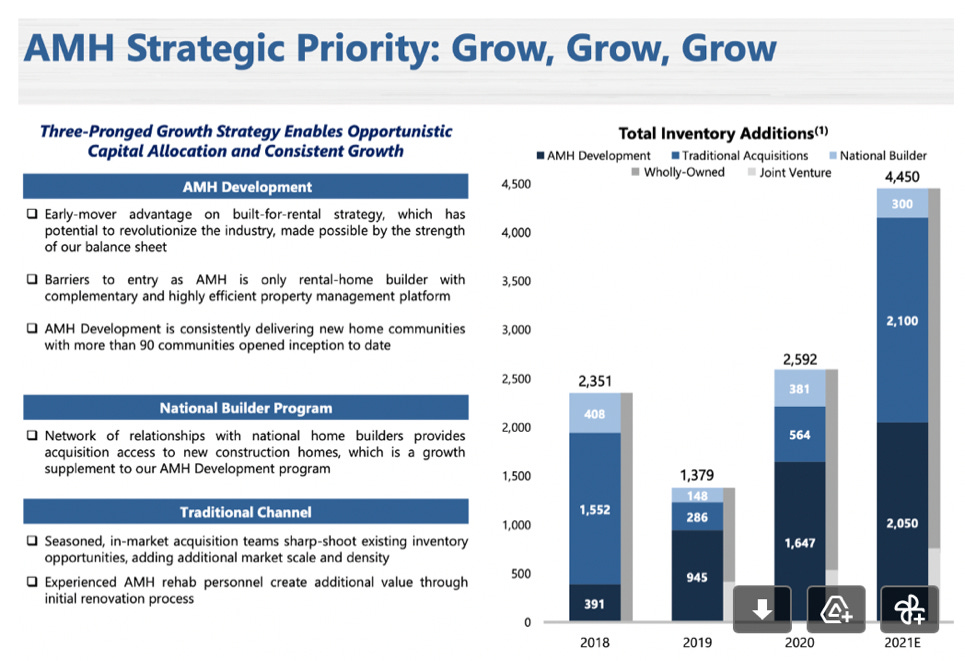
Charlie Kingston
Director
CSK Capital Pty Ltd
Disclaimer
Do not interpret anything above as financial advice. This article has been prepared by the author, CSK Capital Pty Ltd for informational & educational purposes only. The writing contains certain forward-looking statements and opinions which are based on the Author’s analysis of publicly available information believed to be accurate and reliable. While the Author believes that such forward-looking statements and opinions are reasonable, they are subject to unknown risks, uncertainties and other factors that could cause actual results to differ materially from those projected. As of the date the Report is published, the Author may or may not hold a position in the security mentioned. Nothing in this Report constitutes investment advice. Readers should conduct their own due diligence and research and make their own investment decisions.